Photos Link to heading
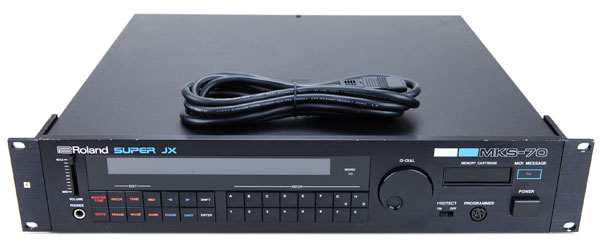
Overview Link to heading
- https://reverb.com/p/roland-mks-70
- https://www.synthmania.com/mks-70_super_jx.htm
- https://www.vintagesynth.com/roland/mks-70
Specification Link to heading
Manuals Link to heading
Basics Link to heading
| Features | Description |
|---|---|
| form factor | 19" rack mount module of the Roland Super JX JX-10 keyboard |
| architecture | 2 sections: (A & B), 6 voices per section, 2 DCO / 1 VCF / 1 VCA / 2 EG per voice |
| polyphony | dual 6-voice or 12 voice modes |
| audio | combined mono output + (2) sets of stereo outputs (A & B), 1 for each section |
Instrument Link to heading
The synthesizer engine of the JX-10 & the MKS-70 are identical. The form factors are different, the JX-10 being a 76-note keyboard.
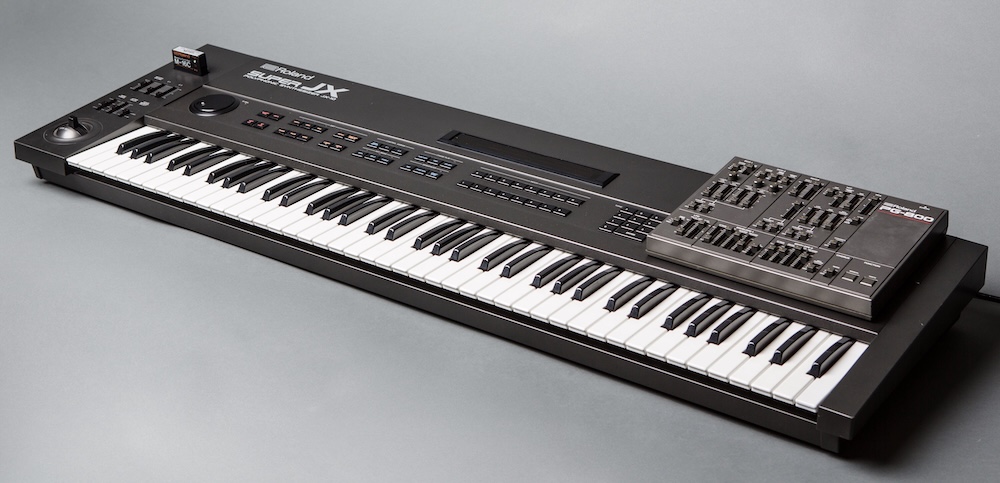
The Super JX voice architecture seems derived from the Yamaha CS-80 or Sequential Circuits Prophet 10, but this is not a confirmed fact, it’s a conjecture.
It is often mistakenly said that the Yamaha CS-80 is a 16 voice synth. It is actually 2 identical 8-voice synths in a dual-layer configuration inside of a single keyboard instrument. The Yamaha CS-60 (which I own) is a single 8-voice synth configuration identical to the voice architecture & sound of the CS-80 with many of the same performance controls. That realization sent CS-60 prices through the roof.
The original Prophet 10 (not the modern version) is actually just 2 Prophet 5 synths in a DUAL keyboard instrument (which is bonkers).
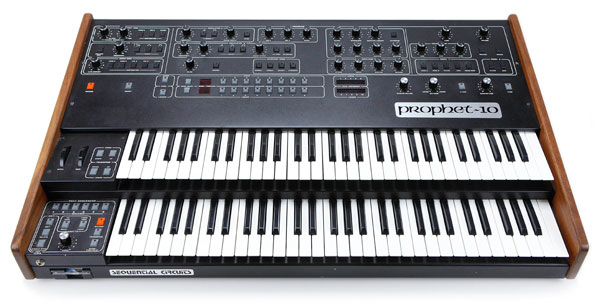
This is not AI or Photoshop.
I believe Roland was striving for a similar “premium” design with the Super JX. It has 2 separate 6-voice synth sections (A & B), each with their own stereo output and a summed mono output for everything (which makes some for delightfully subtle & weird phasing). There is a 12 voice polyphony mode if sections A & B are set to play the same patch.
The Super JX series was the last fully-analog synthesizer architecture Roland produced. “Fully-analog” is doing a little work in that sentence because the instrument has digitally-controlled oscillators (DCO). This was the case for many synthesizers from that era (Roland & Sequential Circuits, & others.) More recent synths like the Novation Peak & Summit use similar architecture.
Despite this, it IS an analog synth. Digital control does not impact the sound of the instrument in the ridiculous way that people talk about “analog vs. digital” on the internet.
Super JX was probably regarded as a failure in the marketplace. Though the keyboard version was luxurious & targeted towards professional musicians, Roland at the time was in the midst of getting their asses kicked by Yamaha’s crisp-sounding, poop-colored FM synths like the DX7. The writing appeared to be on the wall for analog instruments & Roland’s response was the D-50 - an overly bright, brash, PCM-waveform enhanced toy with splashy built-in effects you heard on every hit song from 1988 onwards. There’s no question what that “D” stands for…
Story Link to heading
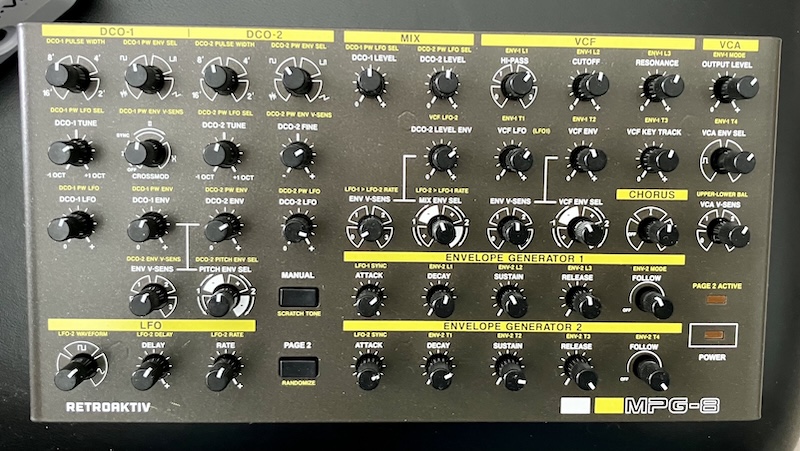
I’ve had my MKS-70 since 1987. It has been fully upgraded with the “Vecoven” mods by Alex Bhinder @ Plasma Music Ltd.. I also replaced my PG-800 with the Retroaktiv MPG-8 Programmer. It sounds amazing, has a new, brighter, more readable display & I can’t wait to start using it more! It’s one of my favorite things on earth.
The unit I have was a floor demo model I talked my dad into buying for me from the now long-gone Torps Music - a local mom-&-pop music store with 2 prime locations…
The original was on Rice St in St. Paul very near the Minnesota State Capitol building - practically around the corner. The store was old, lived in, not super big. It had a dimly-lit basement that I was occasionally allowed to peruse where I found my Cordovox CL10 rotating speaker cabinet.
I frequented the Torps Music on 3rd Av N & Washington Av in downtown Minneapolis. The location was especially convenient for me because it was directly across the street from the long-open, legendary Monte Carlo - one of my mom & dad’s favorites. We went there a lot. My dad was more pliable after a couple martinis & a basket of Asian-spiced chicken wings. (Who isn’t?)
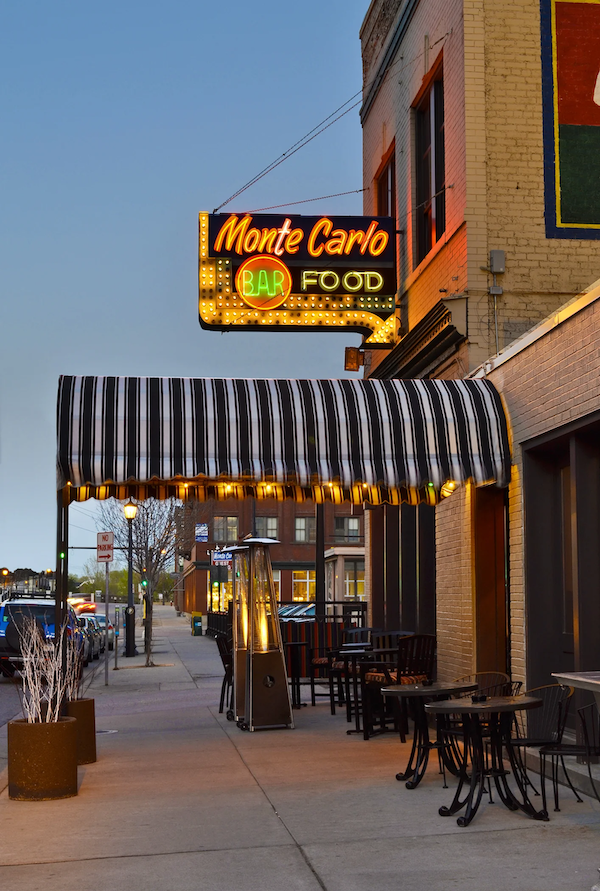
The best.
This location is right in the heart of a neighborhood commonly referred to as the “Warehouse District” or “North Loop”. What was once derelict & somewhat abandoned has very much become the most “tres chic” part of town. The Monte Carlo, open since 1906, has weathered all of the neighborhood’s changes.
Torps Music was part of the earlier, grungier gentrification of the neighborhood in the 80’s. It was in the same building as the now long-gone, legendary Metro Sound Studios. Why legendary? Well, this guy recorded there.
The pretty amazing retail enterprise MARTINPATRICK3 now occupies the space where Torps Music & Metro used to be. Nonchalantly hanging on the wall as a “tres chic” decoration is a wood sound diffuser from the old studio.
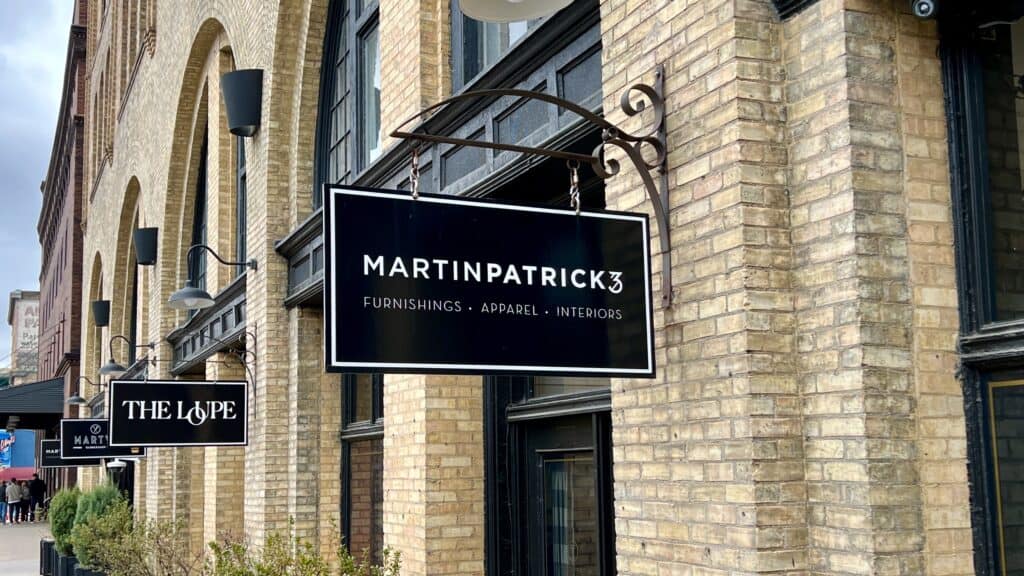
Under normal circumstances, this kind of “progress” might make me upset. It doesn’t, because MARTINPATRICK3 is the kind of place that is keeping brick & mortar retail classy, fun, helpful, experiential & totally worth visiting. Also, right around the corner is the Hewing Hotel which has become a favorite place for me to stay when I visit home.
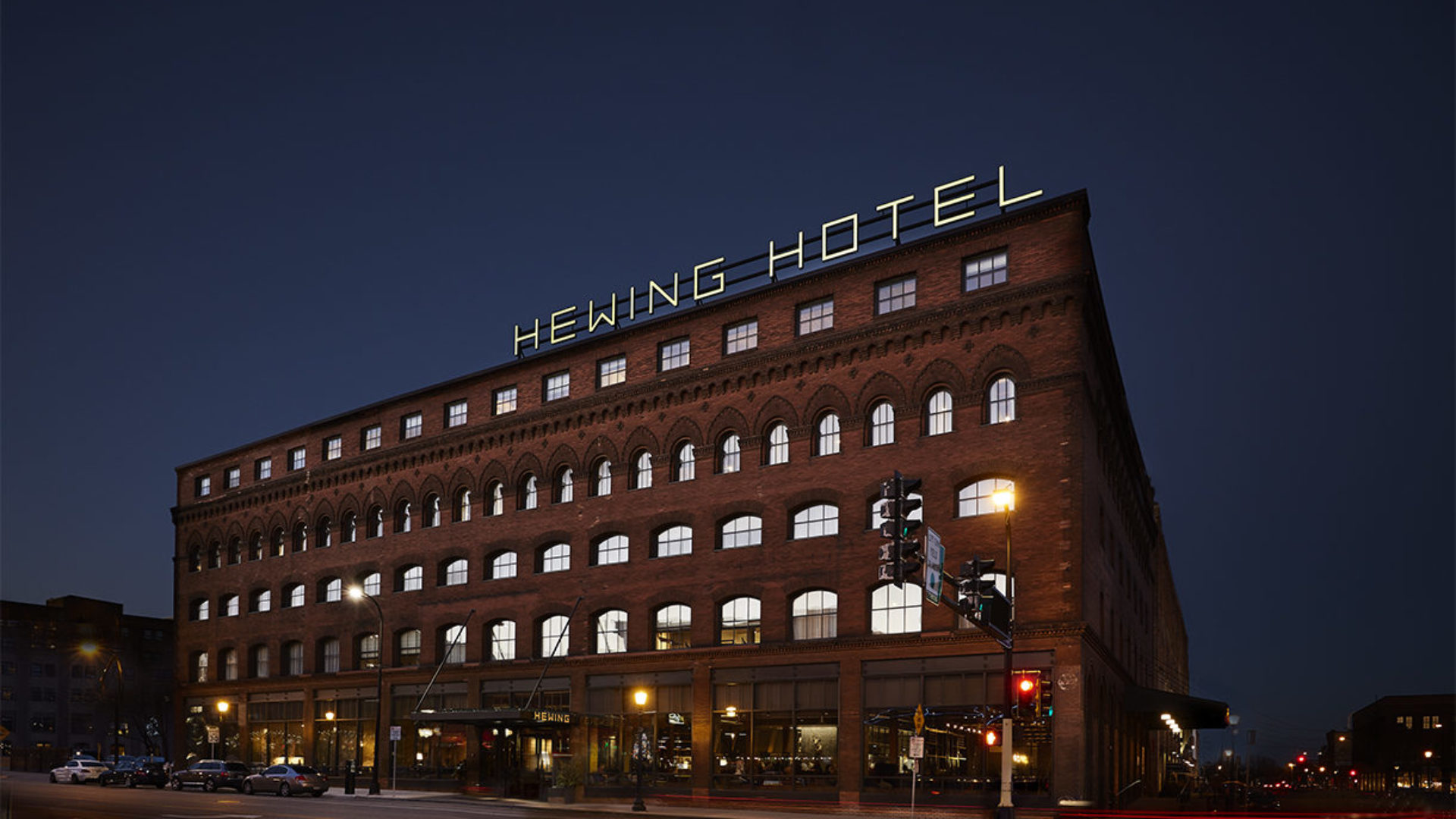
If you are in downtown Minneapolis, you should visit these places.