Table of Contents
Photos / Videos Link to heading
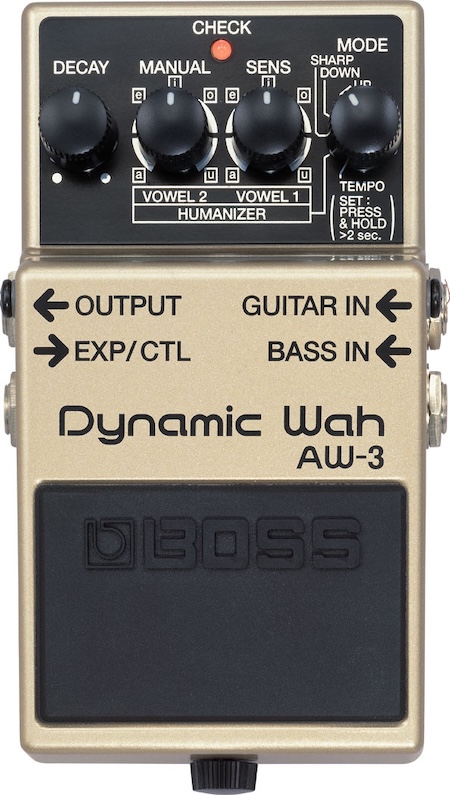
Overview Link to heading
The Boss AW-3 home page (linked below) says ‘Unbelievable’. That’s for sure.
Specification Link to heading
Basics
| Features | Description |
|---|---|
| Effect Type | Digital envelope filter + wah wah |
| Form Factor | Stomp box |
| Connections | “GUITAR” mono input / “BASS” mono input / mono output / Expression + Control input |
| Modes | Up, Down, Sharp, Humanizer, Tempo |
| Controls | Decay / Manual (Vowel 1) / Sensitivity (Vowel 2) |
| Release Year | 2000 |
Manuals
Thoughts Link to heading
Old Faithful Link to heading
There are a crazy amount of good & bad effect pedals made by both large companies & boutique effects houses. This would probably not be true if Boss hadn’t blazed the mass-produced effect pedal trail in the 1970’s.
Boss is a Roland brand. If you don’t know anything about Boss, allow me to make the analogy that Boss is the Honda of effects pedals:
- Affordable
- Egalitarian
- Japanese 🇯🇵
- Reliable
Your Boss pedal will efficiently get you where you want to go most of the time without trouble. It might not be luxurious, but, who knows, it could get you through an energy crisis.
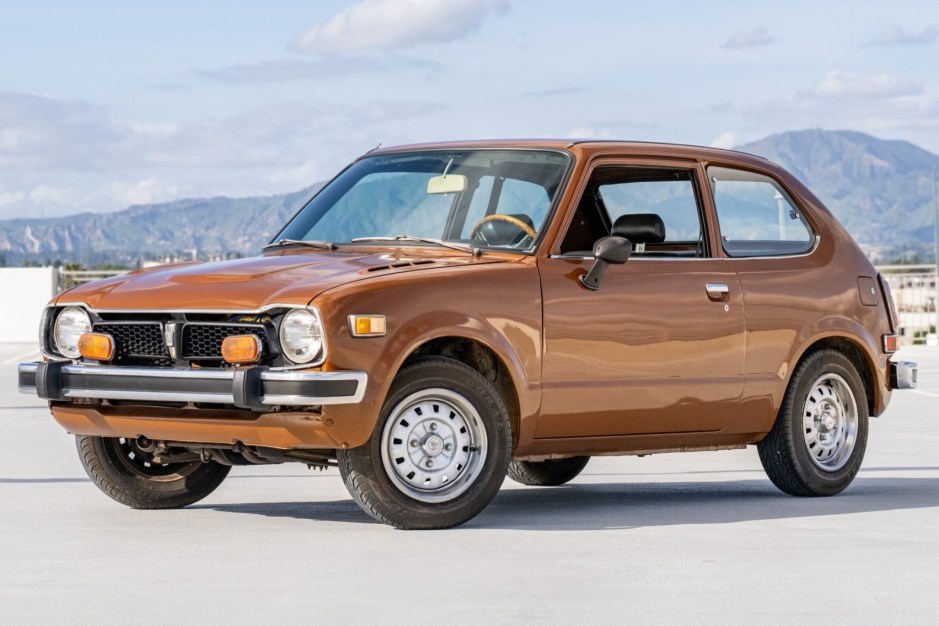
Meep meep.
It’s wrong to say Boss pedals are hit & miss. Most of them are undeniably great. Often, they are the Platonic ideal of the effect type they deliver: the CE-2 Chorus, the OD-1 Over Drive, the DD-7 Digital Delay come to mind.
But, when Boss or Roland miss they tend to miss spectacularly.
Some of Roland’s most adored, cherished, legendary, sought-after gear - the TR-808 & TR-909 drum machines, the TB-303 Bass Line - were straight-up marketplace flops.
These units did not really do anything like what they were said by Roland to do. They did not have long manufacturing runs. They were dropped off in pawn shops & music stores by their purchasers & picked up by musicians looking for cheap gear that had no preconceived notions about what they were or how to use them. Entire genres like acid & house music were built around this failure mode - a testament to something curious about the environment in which Boss & Roland products are made: a melange of the Japanese work ethic, unique design aesthetics & a culture that’s a little quirky. It’s difficult to put a finger on it & I am extremely grateful for it.
New musical genres will not be built around the Boss AW-3 Dynamic Wah, but, IN THE YEAR OF OUR LORD 2026 Sweetwater.com is still selling it brand new at a reasonable price. This either means they have a warehouse full of them nobody wants, or, Boss is still manufacturing them.
Somebody must like it.
Wah? Link to heading
A “wah” is a bandpass filter configured so the cutoff frequency can be controlled or “swept” by a potentiometer, usually connected to a foot pedal. (The filter sweep is what makes the “wah wah” sound.)
So wah wah.
An envelope filter allows control over a wah effect via guitar picking intensity or input level instead of a knob sweep. This is what makes it DYNAMIC. Remember this?
I’m not aware of too many things.
That is an ok sounding 1988 envelope-filtered wah effect I guess. It can’t be the Boss AW-3 Dynamic Wah though since it has only been around since The Year 2000.
The AW-3 is a Boss effect pedal like so many other Boss effects: it’s housed in the classic single-switch configuration. It combines envelope wah effects like those found in the Maxon AF-9 or Musitronics MU-TRON (used on hits by Stevie Wonder & many others), synth-y human vowel sounds, traditional manual “wah wah” pedal capability like the “OG” Dunlop Cry Baby Wah & a tap tempo-synced modulated wah effect.
To me, the AW-3 sounds kind of nasal & weird. It is overly sensitive to input. There are almost no knob positions where the pedal just sounds “good”. Most guitar players seem ambivalent about it.
It does do several interesting things, however, when used with keyboards:
- Because it has both “GUITAR” (high) & a “BASS” (low) input, the frequency sweep accommodates full-range instruments.
The high / low inputs are hard-wired to dramatically different sweep ranges. I usually connect the AW-3 to my pedalboard in a way that lets me switch between the 2 different inputs on the fly.
It can act as a “fixed” wah / filter by using it with an expression pedal, i.e., leaving the pedal “stuck” in a particular spot in the sweep range gets a particular EQ / filtered sound. Unfortunately, it’s a sound that everyone knows because of this.
It’s a fantastic FSU pedal. (Not Florida State University.)
FSU pedals make something sound gross or terrible, intentionally. (Now, sound it out…) The AW-3 excels in this area. It is especially good on a drum track or a drum machine in the “HUMANIZER” mode, intended to deliver talk box-like effects or vocal synth-like sounds. It kind of does, except that it doesn’t…
- The auto or “TEMPO” wah mode sounds pretty great on Clavinet or any electric piano (like the Rhodes).
The pedal has a “tap tempo” feature for controlling how fast the auto wah modulation goes but honestly it sounds good at almost any tempo regardless of the tempo of the music if you’re playing in kind of a “rhythmic” way.
Story Link to heading
I’ve debated getting rid of my AW-3 many times. I think I would just have to give it to someone, but, I am afraid whoever I give it to won’t like me afterwards…
I don’t remember when I bought it but I know why I bought it - to make this sound:
Fonk.
It doesn’t.
Even if it did, I think Joe Zawinul is playing a trick here: either the stereo effect from the Rhodes suitcase cabinet is incredibly pronounced or there are 2 Rhodes tracks overdubbed, panned left & right, one with & one without wah. Hard or impossible to do live, maybe possible with some programming. I could be wrong, but, dang you Joe for being so funky!
What does it sound like? Link to heading
It’s the last pedal played in this video. It’s by far the worst sounding of the bunch…
Who played it? Link to heading
I don’t know.
What songs use it? Link to heading
I don’t know.